
Devdatt Nerurkar
Founder of WiserWill
What Happens If You Die Without a Will in Malaysia
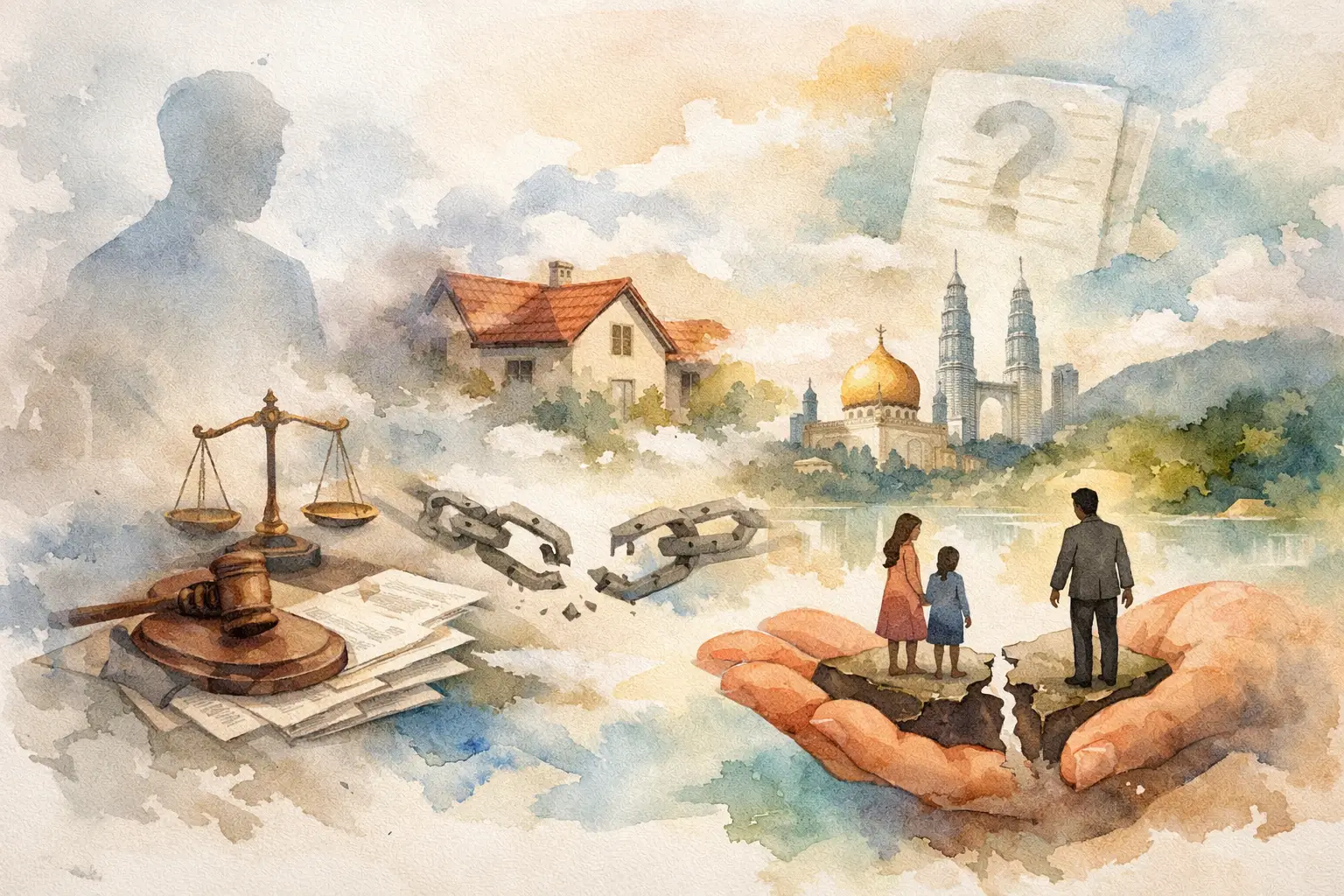
A family can be grieving and still face immediate financial decisions: who can deal with the bank, keep up property payments, or access documents? If you die without a will in Malaysia, the people closest to you do not simply receive whatever you had intended to leave them. The law decides who inherits, and someone must first obtain legal authority to administer the estate.
For non-Muslims, this is called dying intestate. It can turn a personal family matter into a long administrative process, particularly where there is property, young children, business interests, or relatives with different expectations. Don’t worry - a will is not only for the wealthy. It is a clear set of instructions that helps the people you trust act when they need to.
If You Die Without a Will in Malaysia, Who Inherits?
When a non-Muslim dies intestate, the Distribution Act 1958 generally determines how assets in the estate are divided. Your verbal promises, a note on your phone, or what your family feels is fair do not replace the statutory rules.
The outcome depends on the relatives who survive you. Where there is a spouse and children, the spouse generally receives one-third and the children share the remaining two-thirds. If there is a spouse and parents but no children, the spouse generally receives one-half and the parents share one-half. If there are children and parents but no spouse, the children generally receive two-thirds and the parents share one-third.
If only one eligible class survives, such as a spouse only, children only, or parents only, that class may receive the whole estate. If there are no spouse, children, or parents, the law follows a further order of relatives. This can include siblings and more distant family members, depending on who is alive.
That structure may be sensible in some families. But it cannot account for your real circumstances. Perhaps one child has a disability and needs extra support. Perhaps you want to provide for a long-term partner who is not your legal spouse, a stepchild, a close friend, or a charity. Perhaps you want one sibling to receive a particular family item rather than an equal cash share. Intestacy does not make those choices for you.
These rules are generally relevant to non-Muslims. Muslims are subject to different inheritance principles, including faraid, and should obtain advice suited to their circumstances. Estate rules can also differ for Sabah and Sarawak, or where overseas assets are involved, so specialist advice may be appropriate for a more complex estate.
Your Estate May Be Frozen While Someone Applies
A common misunderstanding is that a spouse or adult child can automatically manage everything after a death. In practice, financial institutions and land offices usually require formal authority before releasing or transferring estate assets.
Without a will, the family usually needs to apply for Letters of Administration. An administrator is then appointed to collect assets, settle debts and distribute what remains under the applicable law. The process may involve agreement among beneficiaries, sureties or other requirements, and documents for every relevant asset.
This is not merely paperwork. A disagreement over who should become administrator can delay matters before the estate is even distributed. Property cannot be sold as easily, bank funds may remain inaccessible, and relatives may have to make decisions together at a difficult time.
With a valid will, you appoint an executor yourself. The executor has the role of applying for probate and carrying out the instructions you have set out. Probate still involves a legal process, but your choice of responsible person gives the estate a clearer starting point.
A Will Gives You Choices the Law Cannot Guess
A will lets you decide what happens to assets that form part of your estate, rather than leaving every decision to the intestacy formula. You can set percentages, leave specified items or sums, and add practical instructions for your executor.
It also lets you choose the people who matter. You may appoint up to four main executors and a substitute executor, which can be helpful if one person is unable or unwilling to act. For parents, appointing guardians is often the most urgent reason to make a will. A will records who you would want to care for minor children if both parents die, although the final arrangements must always reflect the child’s welfare and the surrounding legal circumstances.
A few assets may pass outside the will or need separate arrangements. These can include jointly owned assets with survivorship rights, insurance policies with valid nominations, and retirement savings with nominations. The details depend on how the asset is held and the nomination made. A will remains valuable because it covers the rest of your estate and brings your overall wishes into one clear document.
What Makes a Will Valid?
A will does not need to be complicated, but it must be properly executed. For a non-Muslim adult in Peninsular Malaysia, a will should be in writing, made by a person aged 18 or over who understands its effect, and signed by the testator in the presence of two witnesses. The witnesses should sign in the testator’s presence as part of the same signing process.
Choose independent adult witnesses. A beneficiary, or the spouse of a beneficiary, should not witness the will because this can affect that person’s gift. It is also sensible not to rely on an executor as a witness where an independent option is available.
You do not usually need to notarise or register a will for it to be valid. What matters is that it is clearly drafted, signed correctly, stored safely, and known to the executor. If you have an earlier will, a new will should make clear whether it revokes the old one. Do not handwrite amendments onto a signed will and assume they will work - changes need to be made with the same care as the original document.
Start With the Decisions That Matter Most
Putting off a will often happens because people think they must have every detail perfectly organised first. You do not. Start with a practical picture of what you own, what you owe, and who depends on you.
Write down your property, bank accounts, investments, vehicles, valuable personal belongings and digital assets. Consider who should receive them if a named beneficiary dies before you. Then think carefully about executors, guardians and the people you want to benefit. A simple estate can still have important instructions.
WiserWill is designed to make this process easy and affordable for non-Muslim Malaysians: you can create a personalised, lawyer-verified will online, download it, print it, and sign it with witnesses. Its flat MYR 75 fee does not increase because you have several beneficiaries, more than one executor, or detailed instructions. Your will details are not stored or read by the platform, and you can make free edits for one year. For unusual family arrangements, business succession, foreign assets or concerns about a possible dispute, consider legal advice alongside your will preparation.
A will should be reviewed after major changes such as marriage, divorce, a new child, a death in the family, buying property, or a significant change in wealth. Update it properly rather than relying on a conversation with relatives. The small amount of time you spend making your wishes clear now can spare the people you love from having to guess later.
