
Devdatt Nerurkar
Founder of WiserWill
How to Store a Signed Will Safely at Home
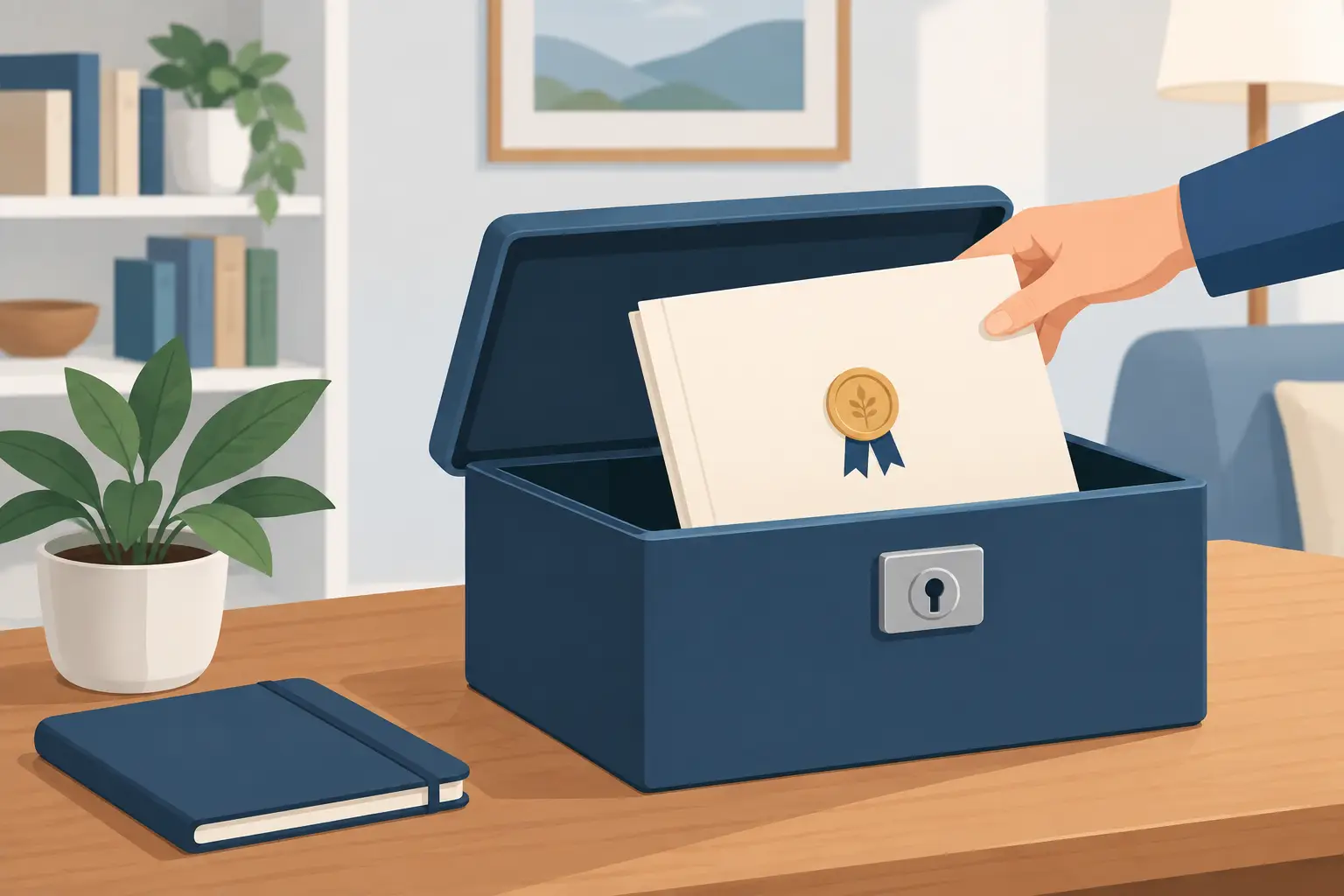
A Will only works when the right document can be found. You can store a signed Will safely by protecting the original from damage, keeping it out of the wrong hands, and making sure your executor knows exactly where to look.
That balance matters. A Will hidden so carefully that nobody can locate it may cause the same stress and delay as a Will that was never made. On the other hand, leaving it in an obvious drawer, exposed to water, fire, or unauthorized access, puts a highly personal document at risk.
Why the Original Signed Will Matters
Your signed Will is more than a copy of your wishes. Depending on the rules that apply where you live, the original document may be needed during the estate administration process. A scanned version is useful as a backup and reference, but it may not replace the signed original.
This is why storage should be part of your Will-making process, not an afterthought. Once you have signed your Will correctly in front of the required witnesses, decide where the original will live and who should be told.
You do not need to give your executor a copy of every page or disclose the details of your estate before you are ready. But they should know that a Will exists, where it is stored, and how they can access it when the time comes.
How to Store a Signed Will Safely
The best storage option depends on your home, your privacy needs, and who you trust. The goal is straightforward: preserve the document, prevent unwanted access, and avoid creating a search problem for your family.
Keep it dry, secure, and easy to identify
A fire-resistant, waterproof home safe is often a practical choice. Choose one that is large enough to hold documents flat, rather than folding or forcing the Will into a tight space. Store the original in a labeled document sleeve or folder so it is not mistaken for old paperwork and thrown away during a move or decluttering session.
A safe protects against common household risks, but it only helps if someone can open it later. Your executor does not necessarily need the combination today, but they need clear instructions on where the access information is kept. You might leave the safe code in a separate secure record, or tell a trusted person how to retrieve it.
Avoid storing the original in a place with frequent moisture or temperature changes, such as a garage, basement, attic, or shed. A sealed plastic sleeve can offer an extra layer of protection, but do not assume any container is fully waterproof unless it is designed for that purpose.
Consider a bank safe-deposit box carefully
A safe-deposit box may feel like the most secure place for a Will, especially if you do not want the document kept at home. It can be a good option, but access after death can be more complicated than many people expect.
If the box is only in your name, your executor or family may face delays before they can open it. Bank procedures and local rules vary. Before choosing this option, ask the bank what happens when the account holder dies and whether an authorized person can access the box. Keep a record of the bank name, branch, box number, and access arrangements somewhere your executor can find.
For many people, a well-protected home safe combined with clear instructions is simpler. It depends on your circumstances and the level of home security you are comfortable with.
Do not leave it with someone who may move or lose track of it
Handing your original Will to a relative, friend, or executor can work if that person is organized, trustworthy, and likely to remain easy to contact. Still, this arrangement has risks. People move, relationships change, and documents can be misplaced among their own papers.
If you choose this route, confirm that the person is willing to hold the document and understands that it should not be altered, marked up, or discarded. Record their full name and contact details in your personal records. It is also sensible to tell one additional trusted person where the Will is held, without sharing its contents.
Keep digital copies, but protect them properly
Create a clear scan or photograph of the signed Will after it has been executed. Save it in a secure, password-protected location and label it with the date. This copy can help your executor identify the latest version and understand what to look for if the original cannot be found immediately.
Do not rely on a digital copy alone unless you have confirmed that it is accepted in your jurisdiction. Rules on electronic Wills and digital documents differ. A scan is best treated as a backup, not a substitute for safe storage of the original signed document.
Be cautious about sending your Will by ordinary email or storing it in a shared family folder. Your Will can reveal your assets, family arrangements, and personal decisions. Give access only to people who genuinely need it.
Tell Your Executor Where the Will Is
The most useful step is also the simplest: tell your chosen executor where the original is stored. You do not need to explain every decision in your Will, and you do not need to hand over the document now. A short note is enough.
Include the storage location, how to access it, the date of your most recent Will, and the name of the person or institution holding it, if relevant. Keep this note separate from the Will itself. If you update your storage arrangement, update the note too.
It is also wise to tell your executor if you have revoked an older Will. Finding an outdated version first can create confusion at an already difficult time.
What Not to Do With Your Signed Will
A few common mistakes can create unnecessary problems:
- Do not write changes, corrections, or notes directly on the signed original. Even a small handwritten change may raise questions about whether your Will was altered correctly.
- Do not staple new pages, remove pages, or replace individual pages after signing. If your wishes change, create a new Will or get appropriate guidance on making a valid amendment.
- Do not store the only original in an unprotected desk drawer, loose filing pile, or box of papers that could be discarded.
- Do not keep the location entirely secret. Your executor needs enough information to locate the document.
If you make a new Will, destroy old copies that could confuse your family, while keeping a clear record that a newer version exists. Be especially careful if your executor, beneficiaries, guardians, or asset distribution instructions have changed.
Review Storage When Life Changes
Your storage plan should be reviewed whenever you move home, change your executor, get married or divorced, have a child, or update your Will. A safe that was convenient in one home may no longer be practical. An executor who once lived nearby may now be overseas or no longer be the right person for the role.
Reviewing does not always mean rewriting your Will. Sometimes the only update you need is a new storage note or a conversation with your executor. But if your wishes have changed, make sure the document itself is updated properly rather than relying on informal instructions.
For people creating a Will online, privacy may be a major concern. WiserWill is designed so users can create their Will without having their personal Will details stored or read by the platform. Once you receive and sign your completed Will, safe physical storage and clear executor instructions remain your responsibility.
A carefully made Will is a practical gift to the people you leave behind. Put the original somewhere protected, make its location known to the right person, and revisit the arrangement when your life changes. That small act of organization can spare your family a long and stressful search later.
