
Devdatt Nerurkar
Founder of WiserWill
What Makes a Will Invalid? 7 Mistakes to Avoid
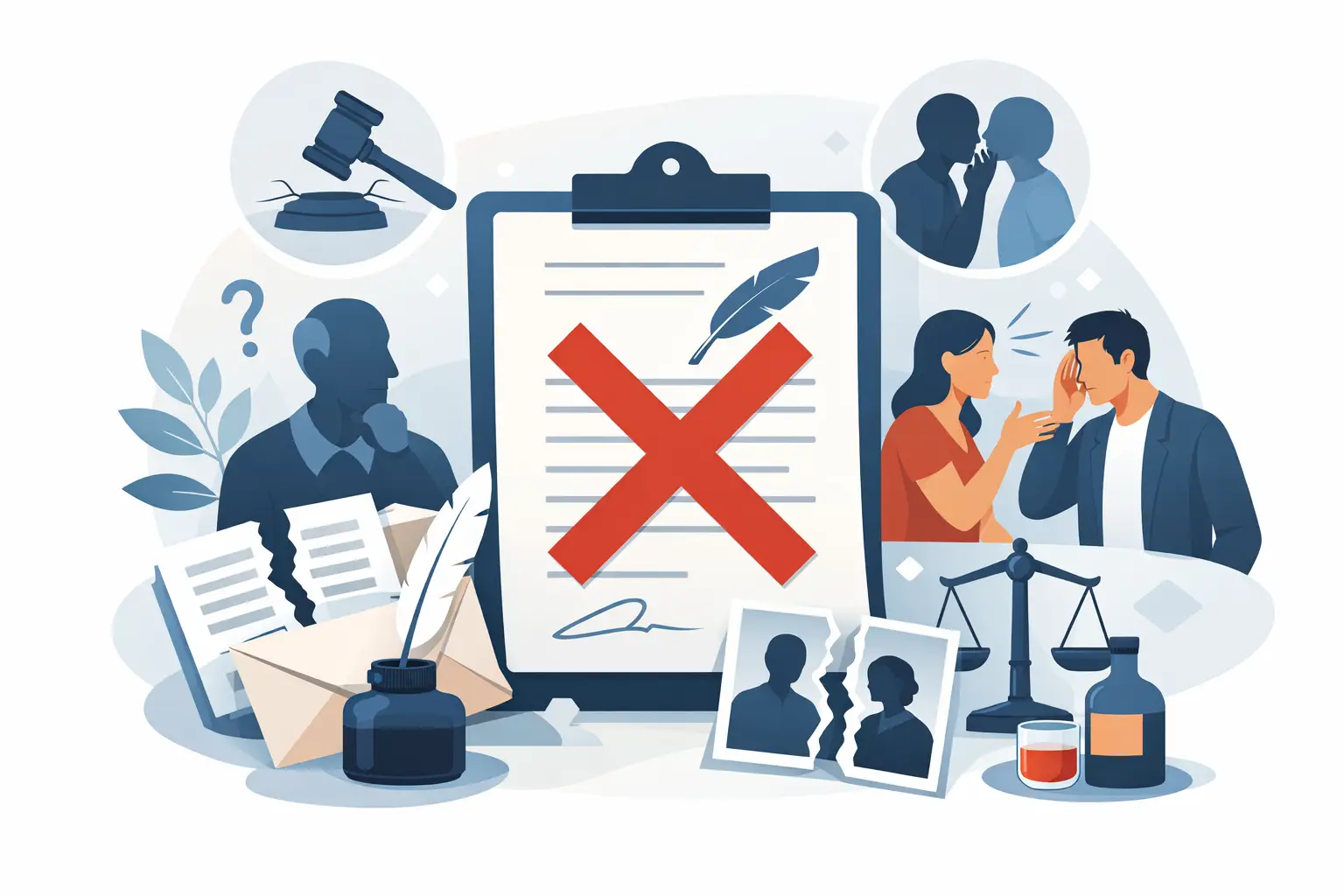
A Will can contain clear, thoughtful instructions and still fail when it is needed most. The reason is often not the choice of beneficiaries. It is a basic legal requirement that was missed when the document was signed. Understanding what makes a Will invalid helps you create a document your family can rely on, rather than one that creates delays, cost, and conflict.
Will laws differ by state, so this is general U.S. information rather than legal advice. If your family situation, assets, or estate plan is complicated, getting state-specific legal advice can be worthwhile. For many people, though, avoiding the mistakes below is a strong starting point.
1. The person making the Will lacked legal capacity
To make a valid Will, the person creating it must generally be an adult and have what the law calls testamentary capacity. In plain language, they need to understand that they are making a Will, have a reasonable understanding of what they own, and recognize the people who would naturally expect to inherit from them.
Capacity does not require a perfect memory or a clean bill of health. An older adult, or someone living with a medical condition, may still be fully capable of making a Will. The key question is whether they understood the decision at the time they signed.
A Will is more likely to be challenged if it was signed during a period of serious confusion, shortly after heavy medication was given, or when there is medical evidence that the person could not understand the document. If capacity could be questioned, careful timing, clear records, and independent legal guidance can reduce the risk of a dispute.
2. Someone used undue influence or pressure
A Will should reflect the will-maker's own choices. It can be challenged when another person pressures, manipulates, threatens, or isolates them to secure an inheritance.
Undue influence is more than a family member making a suggestion or expressing disappointment. Courts usually look for a relationship of dependence, an opportunity to influence the person, and a result that appears unusual or unfair in the circumstances. For example, concern may arise if a dependent adult suddenly leaves everything to a caregiver who arranged the Will and excluded close family without a clear explanation.
The practical safeguard is independence. Discuss your wishes privately, prepare your instructions yourself, and avoid having a beneficiary control the process. If you are making a decision that others may find surprising, consider documenting your reasons separately. That note may not be part of the Will, but it can provide helpful context later.
3. The Will was not signed correctly
Signing is not a formality to rush through. It is one of the most common reasons a Will fails.
Most states require the will-maker to sign the document, or direct someone else to sign on their behalf while they are present. A signature may be a full legal signature, and in some situations a mark or another clear form of signature can work. But requirements vary, and an unsigned draft is usually not a Will at all.
Do not assume that printing your name at the top, initialing a page, or saving a document on your computer is enough. Finish the document, review it, then complete the signing process required in your state. Keep the original signed Will in a safe place that your executor can locate.
4. The witnesses were missing, ineligible, or signed incorrectly
In most states, a standard typed Will needs witnesses. Usually, two competent adults must witness the will-maker sign the document or acknowledge their signature. The witnesses then sign the Will according to the state's rules.
The details matter. Some states require everyone to be present together. Others allow a witness to sign after the will-maker acknowledges a prior signature. Rules can also differ on whether remote witnessing is permitted.
A beneficiary should generally not act as a witness. In some states, the Will may remain valid, but the witness-beneficiary could lose some or all of their inheritance. In other situations, the arrangement can invite an avoidable challenge. Choose disinterested witnesses - adults who are not receiving anything under the Will and are unlikely to benefit from its terms.
What makes a Will invalid when changes are added later?
Edits made after signing can create serious problems. Crossing out a name, writing a new gift in the margin, or attaching an unsigned page may not have the legal effect you intended. It may also raise questions about whether the original document was altered.
For a small update, do not rely on informal handwritten changes. Depending on your state, you may need a properly executed amendment, often called a codicil, or a completely new Will. A new Will is often cleaner when you are changing beneficiaries, naming a new executor, adding a guardian, or making several updates at once.
If you create a new Will, it should clearly state that it revokes earlier Wills. Then destroy old copies where appropriate, while keeping a clear record of the current original. Multiple documents with inconsistent instructions are an easy path to family confusion.
5. The Will was revoked
A valid Will can stop being effective if it is properly revoked. This can happen when you sign a new Will that revokes the earlier one, or when you intentionally destroy the old document.
Accidental destruction can create its own issues. A lost original may lead a court to presume that the will-maker meant to revoke it, particularly if the original was last in their possession. Copies can sometimes be accepted, but the process is harder and may require evidence that the original was not intentionally revoked.
Life events may also affect a Will. Divorce, marriage, the birth of a child, and the death of a beneficiary can change how certain provisions are treated under state law. Do not assume your document automatically covers every change. Review your Will after a major life event and update it deliberately when needed.
6. The document was created through fraud or forgery
A Will is invalid if a signature is forged. It can also be challenged if the will-maker was tricked about what they were signing or was given false information that directly caused a gift to be made.
For example, telling someone that a document is a bank form when it is actually a Will is fraud. So is falsely claiming that a close relative has died in order to influence who receives an inheritance.
Good process protects everyone. Read the final document before signing, make sure it matches your instructions, and do not sign blank pages or incomplete forms. Use a clear signing ceremony with suitable witnesses. These simple steps help demonstrate that the Will was genuine and intentional.
7. Unclear terms create a dispute, even if the Will survives
Not every problem makes an entire Will invalid. Sometimes a court finds that one gift is unclear, impossible, or invalid while the rest of the document remains effective.
Avoid vague instructions such as leaving money to “my favorite niece” when more than one person could fit that description. Identify people by full name and relationship where helpful. Describe specific property carefully, and include a backup beneficiary in case the first person dies before you.
Your Will also cannot control every asset. Jointly owned property, accounts with payable-on-death beneficiaries, life insurance proceeds, and assets held in a trust may pass outside the Will. Review beneficiary designations regularly so they do not contradict your broader wishes.
A valid Will is built on more than good intentions. Give yourself time to make clear decisions, use the correct signing process for your state, and revisit the document when life changes. That care can spare the people you love from having to guess what you wanted.
